

A Visual History of EarthMatters

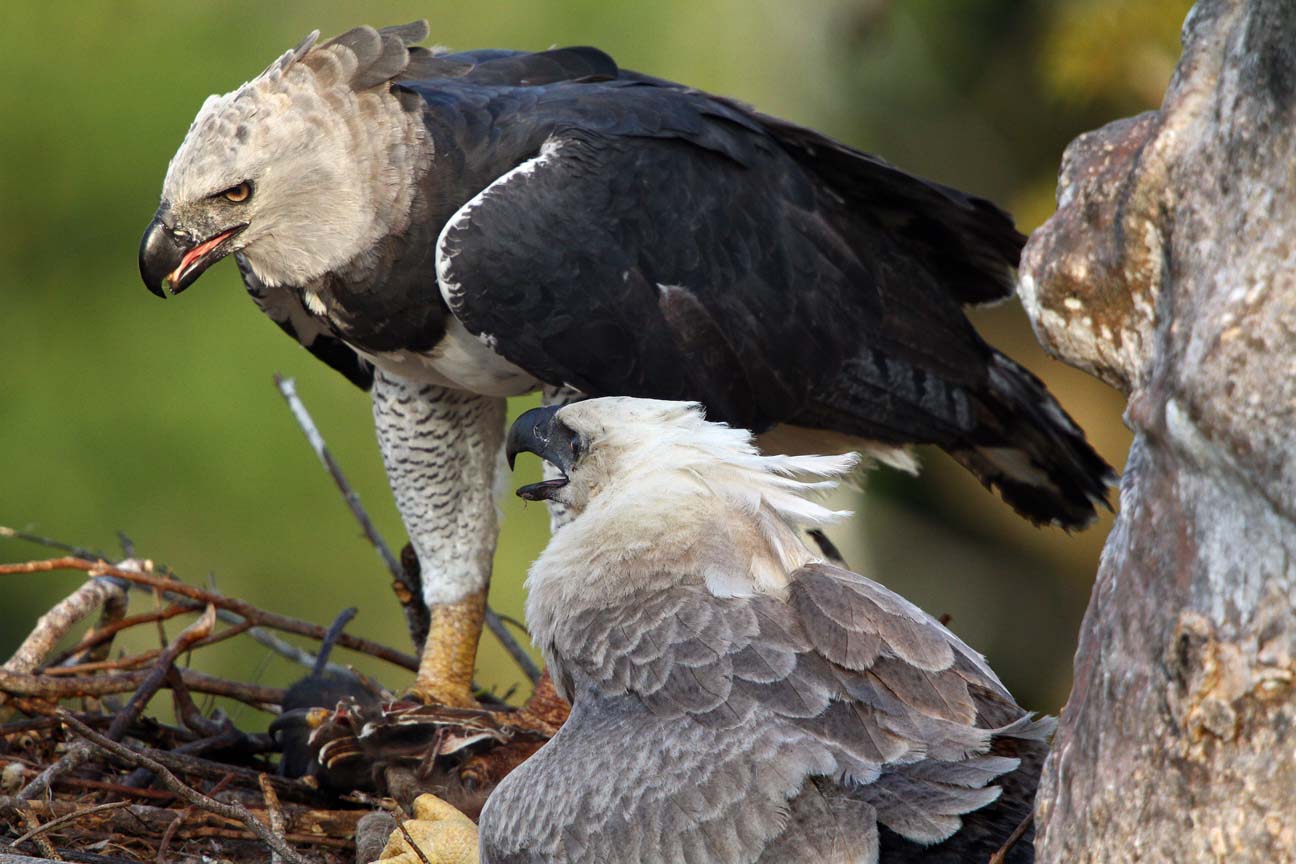
Evaluation and research begins
Dr. Alvarez began his PhD research by organizing an international team to evaluate the conservation status of the Harpy Eagle.
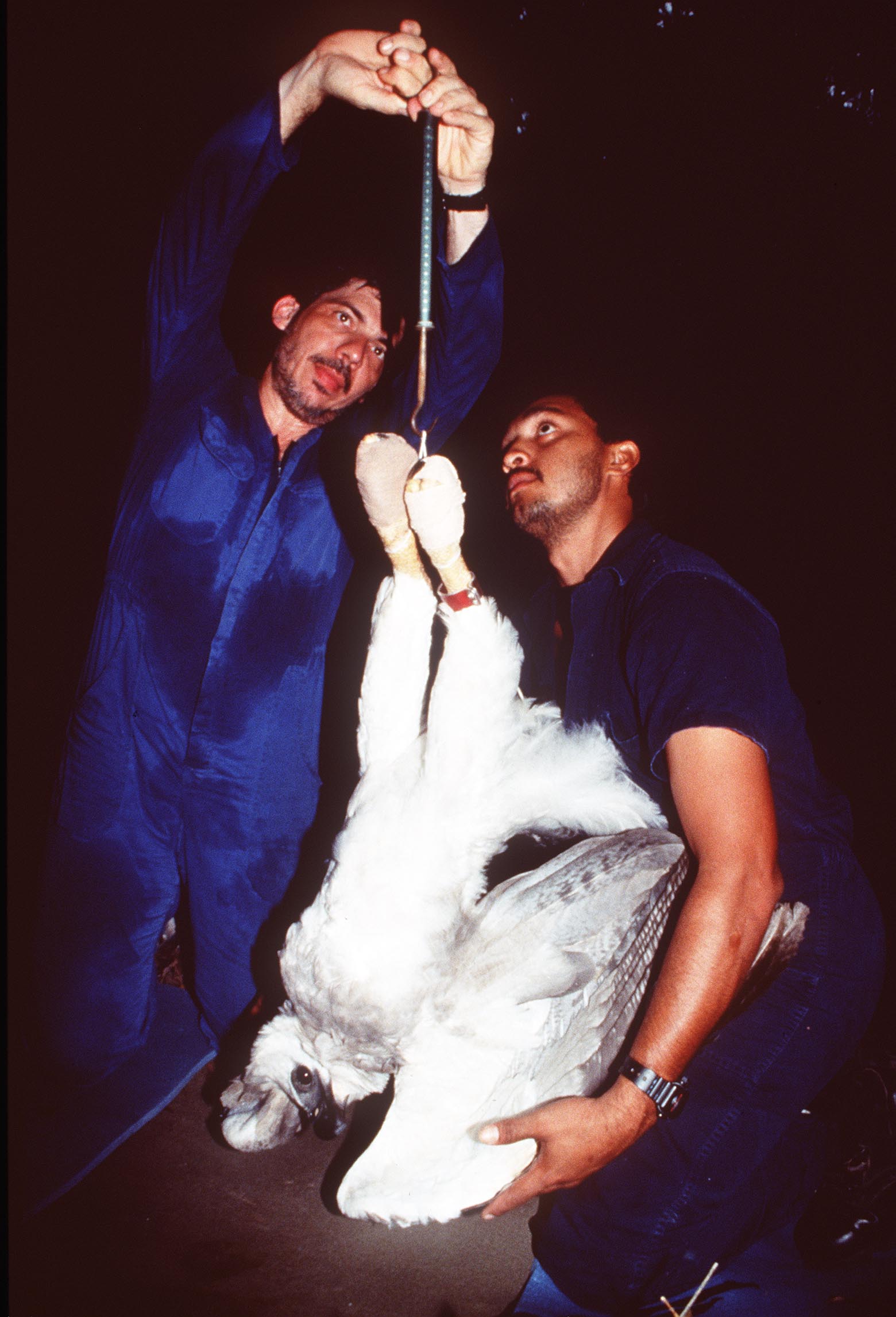
First Harpy nest in Venezuela
The first Harpy Eagle nest in Venezuela was located and documented.

Technology introduced
EarthMatters was a pioneer in the use of the Global Position System (GPS) into field Biology, which at the time, was rare for research and conservation usage.
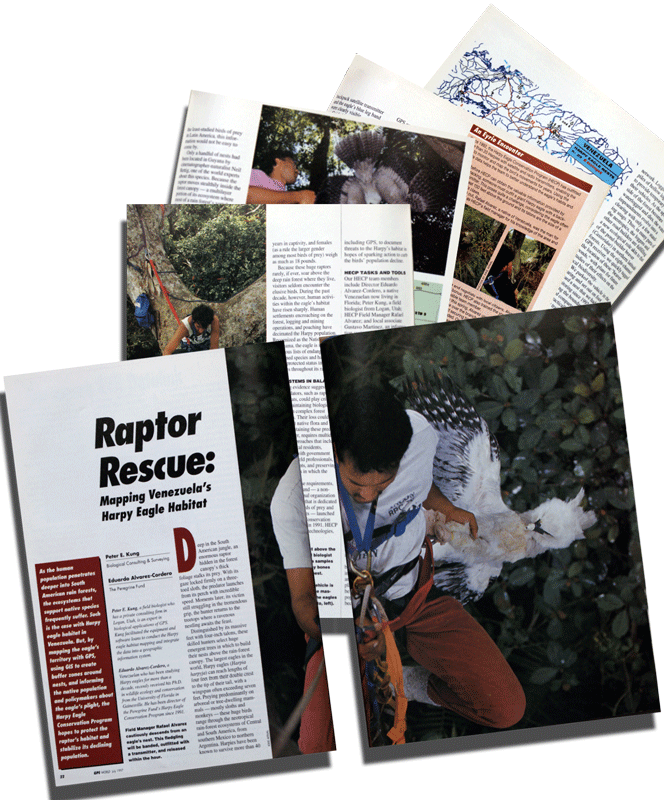
More technology
EarthMatters tagged the first Harpy Eagle with a satellite transmitter in 1992—the first such application of this technology in Latin America. This tool, along with GPS and GIS applications, were initially perceived as unnecessary and costly frills, but have since become mainstream applications in the biology field.

Dr. Alvarez’s PhD thesis completed
From 1989 to 1996, Dr. Alvarez studied the Harpy eagle’s biology and habitat to evaluate its conservation needs. The complete thesis can be found HERE (via the University of Florida’s archives).
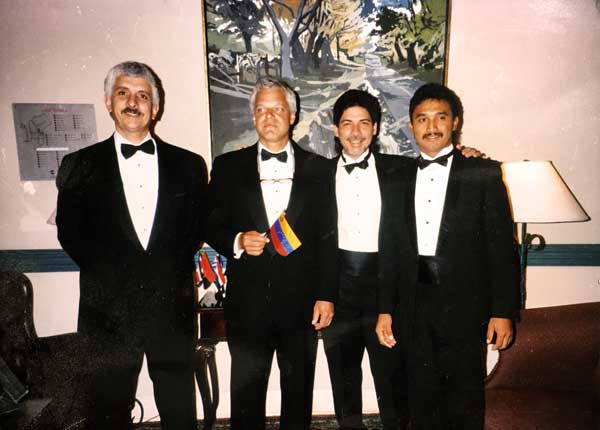
Computer World Smithsonian award
In 1997 The Harpy Eagle Conservation Program received the prestigious award in The Computerworld Smithsonian Program for innovative use of technology in dealing with environmental issues. These awards were first presented in 1991, to “recognize heroes of technological innovation, to demystify public perceptions of technology and to clearly identify the benefits technology brings to the lives of the general public.”
The photo above, in Washington DC, is the original Harpy Team comprised of Gustavo Martinez (IT expert), Peter E. Küng (Wildlife Biologist), Eduardo Alvarez (Ecologist), and Eladio Rafael Alvarez (Field Assistant). A few months later they would organize Earthmatters.org to continue their lifelong commitment to conservation of Harpy Eagles and their rainforest habitat.

EarthMatters founded
EarthMatters.org was established in 1998 to coordinate a continental program focused on finding, monitoring, and protecting the wild populations of Harpy Eagles and other Neotropical raptors.
Harpy Eagle Conservation Program founded
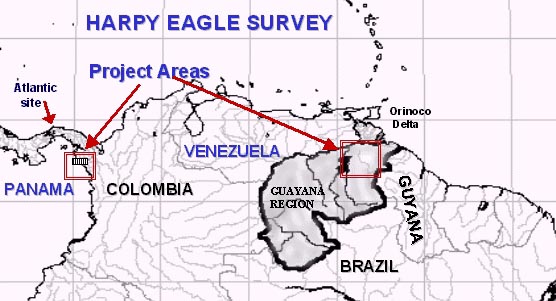
Launched by Earthmatters.org, the Harpy Eagle Conservation Program (HECP) was established, supported, and cooperated with a handful of field projects in Central and South America: primarily Venezuela and Panama, but includes Colombia, Peru, Ecuador, and Brazil. Our international team continually adapts cutting edge technology to collect, store, and analyze information about the eagles and their environment.

Partnership expansion
By the end of 2005, EarthMatters has located and verified more than 50 Harpy Eagle nests in Venezuela and more that 20 in Panama.
Our monitoring efforts have expanded to a handful of countries with new projects. For example, our initiative with Antonio Fernandini in the Madre de Dios region of Peru with located and mapped over 20 Harpy Eagle nests, six Crested Eagle nests, and a handful of nests of other forest eagles.
Our Purpose:
In the early 1970’s Peter Küng contributed to the research of Eduardo Alvarez at the Caroni River basin. In 1997, Peter spearheaded the creation of Earthmatters.org in Logan, Utah. In the 1980s he began mapping the Harpy eagle field surveys in the Imataca Range of eastern Venezuela.
Gustavo A. Martinez Gerstl, a friend since 1969 during our college years at Utah State University, gave unwavering assistance. His networking connections facilitated crucial institutional cooperation and logistic support. He helped bridge the gap between traditional natural history and modern data science, moving beyond simple observation into precise, data-driven conservation action.
The founding team’s goal was to expand the study beyond the 30 nests located in Venezuela and 10 found in Panama. We pioneered a georeferenced approach and developed field techniques that allowed for long term observations of the eagles and their natural environments.
We have spent the last 30 years focusing on the harpy eagle, to promote long-term research-based conservation resulting in the protection of the Harpy eagle, Neotropical forests and their biodiversity. Our projects serve as a point of reference and inspiration to motivate Latin American biologists and naturalists to establish further studies on eagles. We empower local and rural communities through education and facilitate getting them involved in forest restoration and the protection of the species’ natural habitat.
Uniquely, we seek to coexist with, rather than separate humans from one of nature’s top predators. By conserving the Harpy eagle we ensure the survival of the species, its prey, its habitat, and the continuation of many of the ecosystem services provided by the rainforest.
EarthMatters.org initiatives provide training opportunities for researchers, conservationists and natural resource managers to face the problems related to biodiversity management at different scales. We recognize that human beings are unavoidably a part of the landscape. Our approach focuses on bottom-up conservation, engaging local communities to embrace the value of the forest and its inhabitants, and using the Harpy eagle as a symbol of local and national pride.